
How to Choose the Right Dog Lead (Slip Leads vs Clip Leads Explained)
Walking your dog should feel calm, controlled, and enjoyable — not like a tug-of-war. If your dog pulls, zig-zags, or struggles to settle, the issue often isn’t just behaviour — it’s communication. And the lead you use plays a big role in that.
Two of the most effective and commonly used options are slip leads and clip leads. Understanding how they work — and when to use each — can completely change your walking experience.
Why the right lead matters
The lead is your main line of communication with your dog during a walk. The right one helps you:
- Guide your dog calmly
- Reduce pulling
- Build better habits
- Create a more relaxed routine
The wrong one can lead to frustration — for both of you. We have explained the benefits of a slip lead and clip lead so you can understand which option would work for you.
What is a clip lead and when should I use it?
A clip lead attaches to your dog’s collar using a clip.
Best for:
Everyday walks
Dogs with good walking habits
General use and consistency
Benefits:
Simple and reliable
Comfortable and familiar
Great for maintaining routine
A clip lead is your go-to, everyday essential — especially once your dog understands how to walk calmly.
A clip lead is a good choice when your dog walks calmly, you’re maintaining routine and you want comfort and ease.

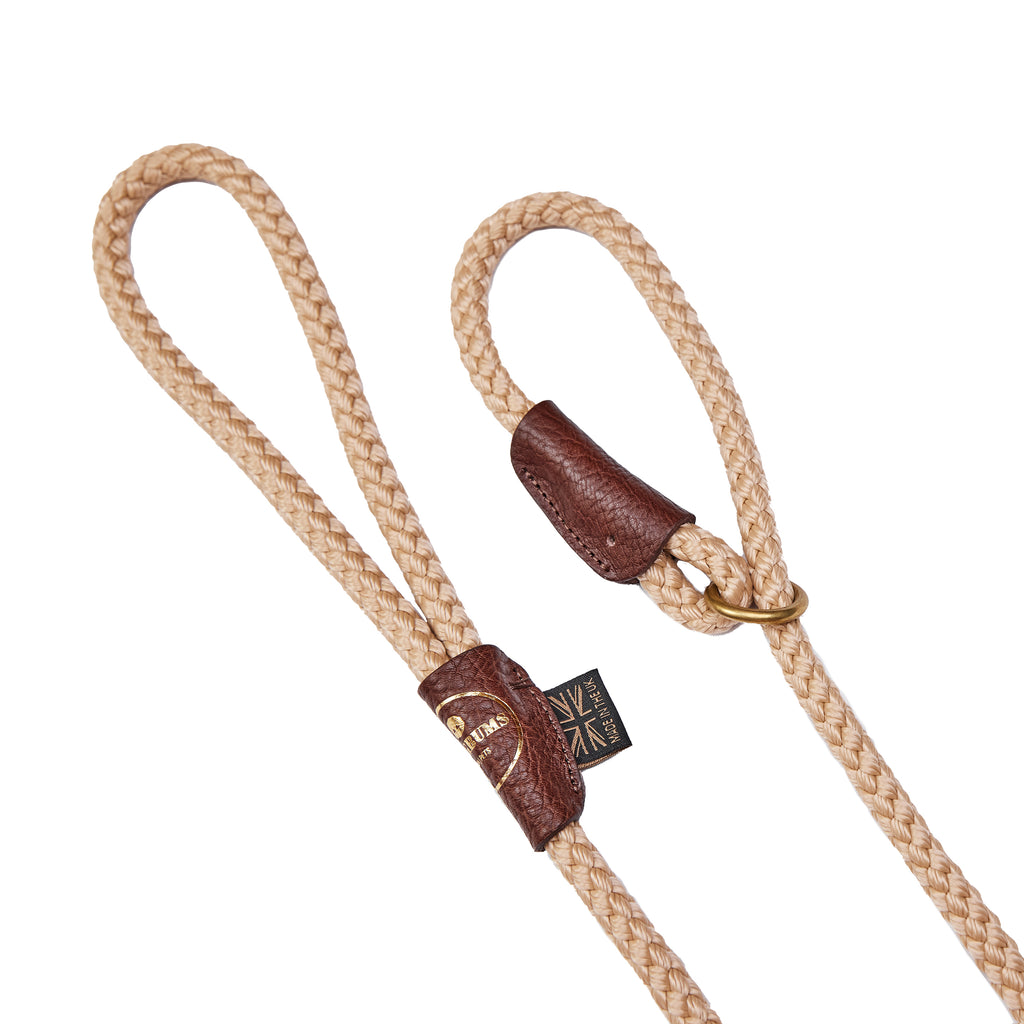
What is a slip lead and how do I use it?
A slip lead is a simple design that combines a lead and collar into one loop that goes over your dog’s head. When your dog pulls, the lead tightens slightly. When they relax, it loosens again. When used correctly, a slip lead isn’t about force — it’s about clear, timely communication. It allows you to guide your dog gently and consistently, helping them understand what’s expected on a walk.
Best for:
Training
Dogs that pull
Building better walking behaviour
Benefits:
Clear, immediate communication
Encourages loose-lead walking
Helps guide behaviour quickly
When used correctly, it’s not about force — it’s about timing and clarity.
How to use a slip lead correctly
A slip lead is most effective when used with the right technique.
Position it correctly: It should sit high on your dog’s neck, just behind the ears. This gives you better control and allows for lighter, clearer guidance.
Check the shape: The lead should form a “P-shape” so it releases quickly after correction.
Use gentle guidance: Apply a quick, light correction, then immediately release. Think: guide, don’t pull
Reward calm walking: When your dog walks nicely, keep the lead loose.
Using a slip lead in a figure of 8
For dogs that pull strongly or need a little more guidance, some owners use a figure-of-8 setup. This involves looping the lead over the neck, then gently around the muzzle This can give you more control with less force, as it helps guide your dog’s direction more clearly.
However:
- It should be introduced calmly and positively
- It’s best used as a short-term training aid
- It should never be tight or restrictive
If you’re unsure, it’s always a good idea to seek guidance when first trying this method.
Common Mistakes to Avoid
Constant tension on the lead
Letting it sit too low on the neck
Over-correcting
Using it without consistency
Slip leads work best when used calmly and intentionally.
Slip leads are excellent aids for training loose-lead walking, when you need more control and guidance or if your dog is prone to pulling.
Where Snugbums fits in
At SnugBums, we focus on making everyday life with your dog simpler, calmer, and more comfortable.
1) Our slip leads are designed to give you clear communication without discomfort, helping you guide your dog with confidence.
2) Our clip leads are reliable, comfortable, and easy to use — perfect for maintaining calm, consistent routines once your dog is walking well.
The right lead won’t solve everything overnight — but it will make communication clearer and training easier. Start with the right tools, stay consistent, and focus on your dog’s comfort. Because a calm walk leads to a calmer dog — and a much happier experience for both of you.
Frequently asked questions
Can I use a slip lead every day?
Slip leads are best used as a training tool rather than an everyday lead for all dogs. Once your dog is walking calmly and consistently, many owners switch to a clip lead for more relaxed, everyday walks.
Are slip leads safe for dogs?
Yes — when used correctly.
The key is:
Proper positioning (high on the neck)
Gentle, quick corrections
No constant pulling
Used this way, slip leads are a safe and effective way to guide behaviour.
What’s better: a slip lead or a clip lead?
Neither is “better” — they serve different purposes.
Slip lead: best for training and improving behaviour
Clip lead: best for everyday walks and maintaining routine
Many dog owners use both depending on the situation.
Why does my dog still pull on a clip lead?
A clip lead doesn’t provide the same level of feedback as a slip lead. If your dog hasn’t learned loose-lead walking yet, they may continue pulling until they’re properly trained.
When should I switch from a slip lead to a clip lead?
Once your dog walks calmly, responds consistently and doesn't pull, you can gradually transition to a clip lead for everyday use.
Can I train my dog without a slip lead?
Yes — but a slip lead can make the process clearer and faster by improving communication.
It’s a helpful tool, not a requirement.
Browse our collection of beautiful leather clip and slip leads below, as well as taking a look at our other stylish and practical products.